
Data and statistics verified as of: February 2026
What's the Future of Automation? 2026 Is the Year AI Stops Talking and Starts Working
The hype cycle around artificial intelligence is finally fading. After years of pilots and promises, 2026 will mark the moment when AI stops being the headline and becomes the habit, according to enterprise software leaders at IFS. The question isn't whether AI works anymore - it's how well organizations can deploy it to do the actual work.
But here's what matters most: not all automation is created equal. The traditional automation you've relied on for the last decade - rule-based, reactive systems that follow scripts - is already becoming obsolete. Something fundamentally different is taking over: agentic AI. And the difference between these two approaches will define which companies thrive in 2026 and which ones fall behind.
Gartner projects that 40% of enterprise applications will include task-specific AI agents by the end of 2026, up from less than 5% today. That's not a gradual shift. That's a complete transformation happening in the next 12 months.
For procurement teams drowning in manual follow-up work, this transformation has immediate, measurable implications. Let's break down what it means - and why your automation strategy might already be outdated.
What Is the Difference Between Automation and Agentic AI?
The distinction is profound, but it starts with a simple question: Does the system wait for you to tell it what to do, or does it pursue a goal on its own?
Traditional automation is reactive. Rule-based systems follow pre-programmed logic: "If invoice total exceeds $50,000, flag for approval." "If supplier hasn't responded in 3 days, send reminder." These systems are predictable and reliable for straightforward, repetitive tasks. But they're also rigid. The moment the user interface of your systems changes, RPA bots break. They can't handle edge cases. They struggle with unstructured data. And they certainly can't anticipate problems before they happen.
Agentic AI is goal-oriented. Instead of following a script, an AI agent understands what you're trying to accomplish and reasons through how to get there. It can break down complex objectives into manageable subtasks, use judgment to navigate unexpected situations, and adjust its strategy in real time based on what it learns. Most importantly, agentic systems continuously learn and improve, refining their performance through ongoing optimization.
Here's a practical comparison:
| Aspect | Rule-Based Automation | Agentic AI |
|---|---|---|
| Decision-Making | Follows pre-programmed "if-then" rules | Uses reasoning and context to make decisions |
| Flexibility | Rigid; breaks when conditions change | Adaptive; adjusts strategy in real time |
| Learning | No learning capability; static rules | Learns from data and experience continuously |
| Proactivity | Waits for triggers (reactive) | Hunts for problems (proactive) |
| Complexity Handling | Excels at repetitive, structured tasks | Handles complex, evolving, unpredictable processes |
| Scalability | Hits limits with dynamic processes | Scales to handle diverse scenarios |
The key difference? Agentic AI doesn't just follow scripts - it pursues goals. It anticipates, adapts, and improves. Rule-based automation waits for the next instruction.
What Does an AI Agent Actually Do? The 2:00 AM Scenario
Let's make this concrete with a real scenario that plays out across procurement teams right now.
It's 2:00 AM on a Tuesday. Most of your procurement team is asleep. But something important is happening in your supply chain.
An agentic AI system like Sotro Copilot is running its nightly analysis. It's scanning all active purchase orders, tracking supplier communication patterns, monitoring delivery timelines, and analyzing historical performance data. Here's what it discovers:
- Order #4521 (critical parts for production): Supplier hasn't acknowledged in 4 days, even though it was due yesterday. Historical data shows this supplier has a 78% on-time delivery rate when they respond within 2 days, but a 34% rate after 3+ days of silence.
- Order #7284 (secondary component): Supplier's response time has degraded 40% over the last two weeks. The AI detected a pattern: they're getting slower, not faster.
- Order #9156 (raw materials): Delivery is scheduled for Thursday, but geopolitical disruptions in the supplier's region could trigger port delays. The AI flags this as "critical risk" based on predictive risk analysis.
An old-school rule-based automation system would do one thing: send a generic follow-up email because the clock hit 3 days without response.
The agentic system does something smarter. It doesn't just react - it reasons. It breaks down what's happening, evaluates the context, and determines the best course of action.
For Order #4521, the AI detects urgency. It drafts an escalation email with specific context: "We notice you haven't confirmed receipt. Based on your historical performance, early response is critical for on-time delivery. Can you confirm ETA?" It surfaces this to your procurement manager with a simple approval button. Manager approves at 8:00 AM. Supplier responds by 10:00 AM. Crisis averted before the business day really began.
For Order #7284, instead of another follow-up, the AI recommends expanding your supplier base and creates a task to evaluate alternatives - because it detected a performance trend, not a one-time delay.
For Order #9156, the AI proactively changes the order status to "at-risk" and suggests pre-positioning safety stock at a regional hub closer to your facility, buying logistics flexibility before you need it.
All of this happens while your team sleeps. The AI isn't waiting for you to ask. It's hunting for problems and preparing solutions.
That's the difference between automation and agentic AI.
What Is Sotro Copilot? An AI Agent That Manages Your Supply Chain
Sotro Copilot is built on this agentic principle. It's not a task automation tool - it's an AI employee that manages PO follow-ups and supplier relationships 24/7.
Here's how it works:
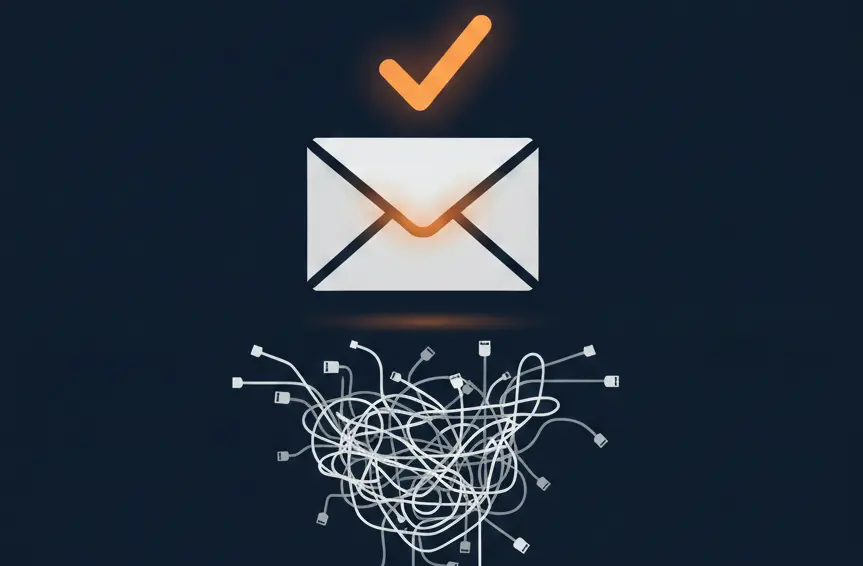
Easy start. You CC Sotro on PO confirmation emails to your suppliers. The system automatically extracts all the necessary data - PO number, line items, delivery date, supplier, quantity - and creates a structured follow-up campaign. No manual data entry. No copying information between systems.
Supplier-agnostic. Your suppliers don't need to log into a portal. They don't need to learn a new system. They receive normal emails and reply as they always do. Sotro watches those replies, extracts updates, and keeps everything synchronized across your systems.
Nightly intelligence. Every night, Sotro Copilot analyzes every active PO campaign. It looks for:
- Suppliers who've gone silent
- Delivery dates that are approaching without confirmation
- Historical patterns that predict delays
- Regional disruptions that could trigger cascading problems
- Suppliers whose communication patterns are degrading
Human-in-the-loop actions. The AI generates recommendations: status updates, escalation emails, alternative supplier suggestions, risk alerts. But it doesn't execute them unilaterally. It presents them to your procurement team for review and approval. You remain in control. The AI accelerates decision-making.
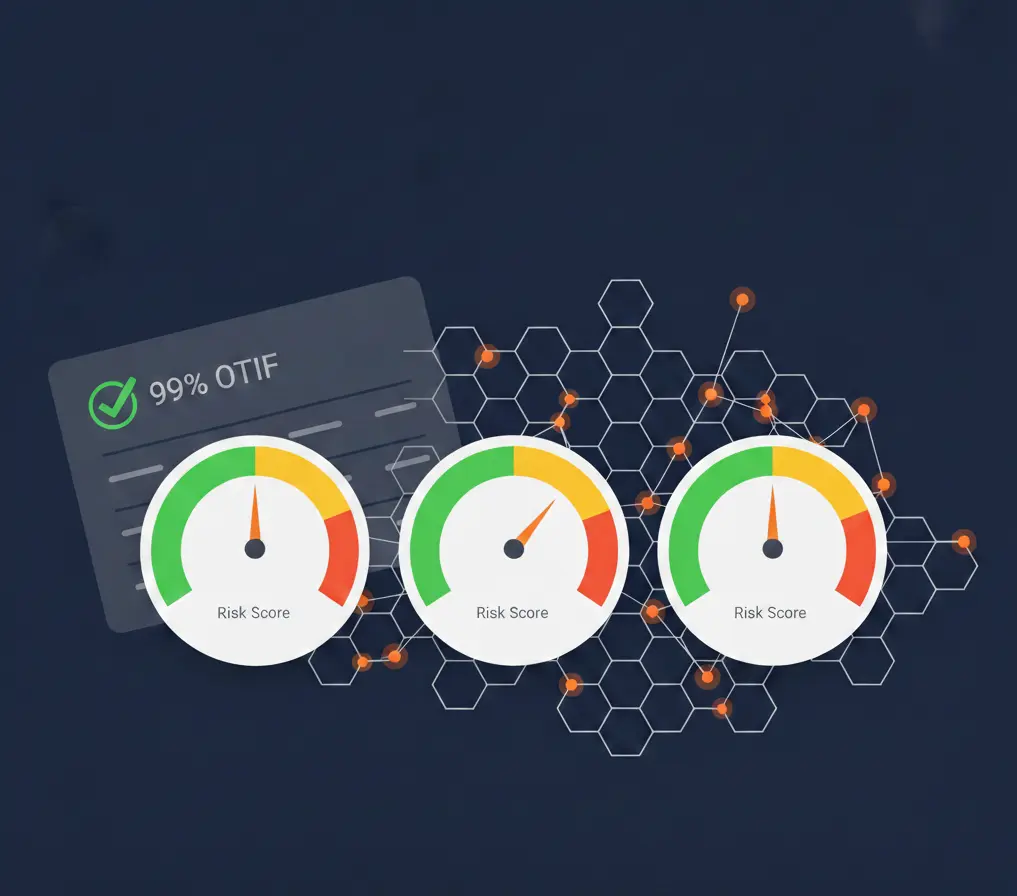
Supplier Reliability Index (SRI). Behind the scenes, Sotro builds a proprietary scoring model that combines regional data, communication patterns, and historical performance. When a supplier's score shifts, the AI alerts you before minor issues become major disruptions. You're always operating with the most current risk intelligence.
The result? Organizations using AI-driven procurement are achieving 2-5× ROI, with cycle times 58% faster and significantly lower labor costs.
Why Does "Human-in-the-Loop" Matter? Trust, Control, and Accountability
If an AI agent can work 24/7 and make decisions autonomously, why do you need humans in the picture at all?
Three reasons: trust, accountability, and judgment.
Human-in-the-loop is an architectural choice, not an afterthought. It's designed into governance from the beginning. When done well, it preserves accountability, reinforces trust, and keeps innovation aligned with human values.
Trust requires transparency. When an AI system proposes an escalation email or flags a supplier as risky, you need to understand why. A good agentic system shows its reasoning. It doesn't say "I escalated to critical." It says "I flagged this as critical because: supplier missed 3 consecutive deadlines, communication latency increased 40% over two weeks, and geopolitical disruptions are predicted in their region." Transparency breeds confidence.
Accountability requires human authority. In high-stakes decisions - changing supplier status, recommending alternative sources, authorizing expedited shipping - the human must have veto power and final approval. This is increasingly mandated by regulatory frameworks like the EU AI Act and NIST AI Risk Management Framework, which explicitly require human oversight for high-risk AI systems.
Judgment requires context. An AI can see patterns in data. But a procurement manager knows the politics, the relationships, the long-term strategy. You might choose to absorb a small delay from a key supplier rather than escalate, because the relationship is worth more than the one-week slip. The AI proposes. You decide.
When human-in-the-loop is implemented properly, it doesn't slow things down. It accelerates decisions by doing the analysis in the background and bringing only the important choices to your attention. You move from drowning in data to focusing on what actually matters.
How Is Agentic AI Different from RPA or Workflow Automation?
For the last decade, companies have used RPA (Robotic Process Automation) and workflow automation tools to handle repetitive work. They've delivered real value. But they also have hard ceilings.
RPA excels at handling straightforward, rule-based tasks - data entry, invoice processing, form filling. But the moment requirements change, UI updates happen, or unexpected data arrives, RPA bots are vulnerable to failure. They create technical debt because small UI changes break automations, leading to frequent rework and updates. They struggle with unstructured data like free-form emails or supplier messages. And they can't adapt to novel situations or learn from experience.
Workflow automation (tools like Zapier, Make, or traditional BPM platforms) improved on RPA by allowing more flexible logic. But they're still built on the same foundation: if-then-else chains. You configure workflows, and they execute that configuration, every time, the same way.
Agentic AI represents a category shift. It's not about automating individual tasks - it's about empowering a system to understand objectives and pursue them intelligently.
Here's the practical difference in a procurement context:
- RPA/Workflow Automation: Trigger a follow-up email after 3 days of silence. If-then logic.
- Agentic AI: Analyze why there's silence. Is it normal supplier lag or a pattern? Are there regional factors? Is the delivery date critical? Recommend the right action based on context and strategy.
RPA breaks when conditions change. Agentic AI adapts.
In procurement, where every supplier is different, every order has different constraints, and external factors (geopolitical, weather, market) constantly shift, agentic systems are better suited for complex, evolving, unpredictable processes.
The market agrees. 93% of IT leaders report intentions to introduce autonomous agents within the next 2 years, and nearly half have already implemented pilots. Organizations are moving beyond asking "Can we automate this task?" to "Can we deploy an intelligent agent to manage this whole process?"
What Does "From Hype to Habit" Mean for Procurement?
IFS's 2026 prediction carries a specific implication for supply chain teams. The headline is clear: AI will stop being experimental and start being operational. But what does that mean in practical terms?
Executive accountability increases. Only 15% of AI decision-makers reported an EBITDA lift for their organization in the past 12 months, and fewer than one-third can tie the value of AI to P&L changes. This means CFOs and C-suite leaders are getting pulled into AI decisions with higher scrutiny. If you're deploying agentic systems, you need to prove ROI, not just promise productivity gains.
Procurement becomes strategic again. Buyers often spend a significant portion of their time manually chasing suppliers for PO confirmations and delivery updates. That's not procurement work. That's administrative overhead. When an AI agent handles the follow-up, procurement teams can shift focus to strategic supplier relationships, contract optimization, and risk management. You're no longer reacting to problems - you're orchestrating your supply network.
Visibility becomes predictive, not reactive. Traditional monitoring reveals issues only after disruption has occurred. Predictive systems analyze trends across time, geography, and supplier behavior to surface risk earlier. In 2026, the standard becomes: do you know about a delay the day it happens, or the day before it was supposed to happen? Agentic AI gives you the latter.
Supply chain resilience becomes measurable. Organizations using predictive risk management have seen 30% reduction in disruptions, 15% cost savings, and 20% improvement in on-time delivery. These aren't pilot numbers. These are production results from companies that have scaled agentic approaches.
The shift from "hype to habit" means procurement teams stop evaluating AI as a potential tool and start deploying it as operational infrastructure.
Frequently Asked Questions
Aren't rule-based automations good enough? Why move to agentic AI now?
Rule-based systems are reliable for static processes. But procurement isn't static. Every supplier is different. External factors change constantly. Rule-based systems are rigid; deviations from the rules require manual reprogramming. Agentic systems adapt. The ROI argument is also decisive: organizations are achieving 2-5× ROI with AI-driven procurement, compared to more modest returns from traditional automation.
If AI agents run autonomously, how do we maintain control?
Control is built into the architecture through human-in-the-loop design. The AI analyzes, reasons, and recommends. Humans approve, modify, or reject. The best systems embed oversight early, with clear decision boundaries: which decisions can be automated, which require escalation, and which should never be fully delegated. Accountability is distributed by design, not surrendered.
What's the ROI timeline? How long until we see returns?
Most organizations see positive ROI within 6-18 months, with some achieving payback in as little as 3-6 months for high-volume, labor-intensive processes. In procurement, where manual follow-up consumes substantial team time, the payback is typically on the shorter end. Procurement automation projects routinely deliver 300-500% ROI within 18 months.
Do our suppliers need to change anything?
No. One of agentic AI's advantages in procurement is that it's supplier-agnostic. Your suppliers continue using email. The AI agent watches, extracts, and synthesizes updates. There's no portal fatigue, no "training the supplier on the new system." This is one reason agentic platforms scale faster than portal-based alternatives.
How does agentic AI handle exceptions or unusual situations?
This is where agentic systems excel. When an action doesn't yield expected results, the reasoning phase allows the agent to diagnose why and adjust its approach rather than blindly continuing. For common exceptions, the agent resolves them autonomously. For complex issues, the agent escalates with full context, so your team can make informed decisions faster.
How does agentic AI in procurement differ from just better forecasting?
Forecasting predicts what will happen. Agentic AI predicts what will happen and then acts. It doesn't just flag a delayed order - it recommends expedited shipping, suggests alternative suppliers, and pre-positions safety stock. It pursues a goal (on-time delivery) across multiple levers, not just visibility.
What about data security and compliance with agentic AI?
Governance is essential. Comprehensive monitoring systems track workflow performance, identify issues, and trigger manual interventions when necessary. Audit trails are maintained for every action. Regulatory frameworks like NIST AI RMF and ISO/IEC 42001 increasingly mandate human oversight and clear accountability. When implemented correctly, agentic systems are more transparent and auditable than manual processes because every decision is logged.
Is agentic AI adoption happening now, or is it still a 2027 story?
It's happening now. Gartner projects 40% of enterprise applications will include task-specific AI agents by the end of 2026, up from less than 5% today. That's not future planning - that's this year. 79% of organizations report some level of agentic AI adoption already. The inflection point has arrived.